

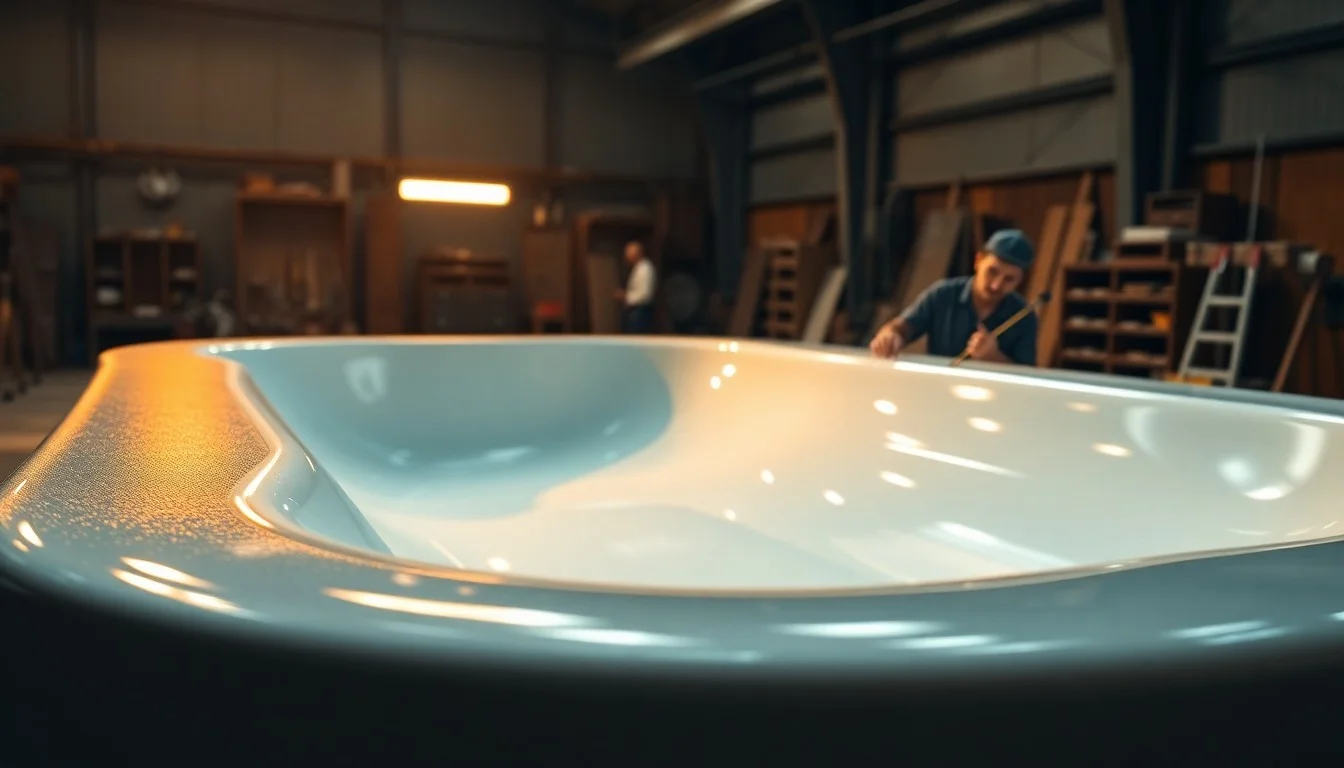
The Mold is the Product
In fiberglass manufacturing, you don’t build the part; you build the mold. The quality of your mold determines the quality of every single piece that comes out of it. If the mold has a scratch, every pot you make will have that scratch.
Critical Design Concepts
Draft Angles
Vertical walls cannot be perfectly 90 degrees. You need a slight slope (2° to 3°), called the draft angle, to allow the part to slide out. Without this, friction and suction will lock the part inside the mold.
Undercuts
An undercut is any feature that prevents the part from being pulled straight out (like a lip that curves inward). Avoid these in simple molds. If required, you must use a multi-piece (split) mold that can be taken apart.
Flanges
Wide edges around the perimeter of the mold. These provide stiffness to the mold itself and a clamping surface for split molds. Never build a mold with thin, sharp edges.
Mold Types: Temporary vs. Production
| Feature | Temporary Mold | Production Mold |
|---|---|---|
| Material | MDF, Melamine, Plaster | Fiberglass Tooling Gelcoat |
| Lifespan | 1-5 pulls | 500+ pulls |
| Surface | Good (needs work) | Class A (Mirror) |
| Cost | Low | High (Time intensive) |
Strategy: Use temporary molds for prototypes or one-off custom projects. Invest in high-quality fiberglass production molds for manufacturing product lines.