

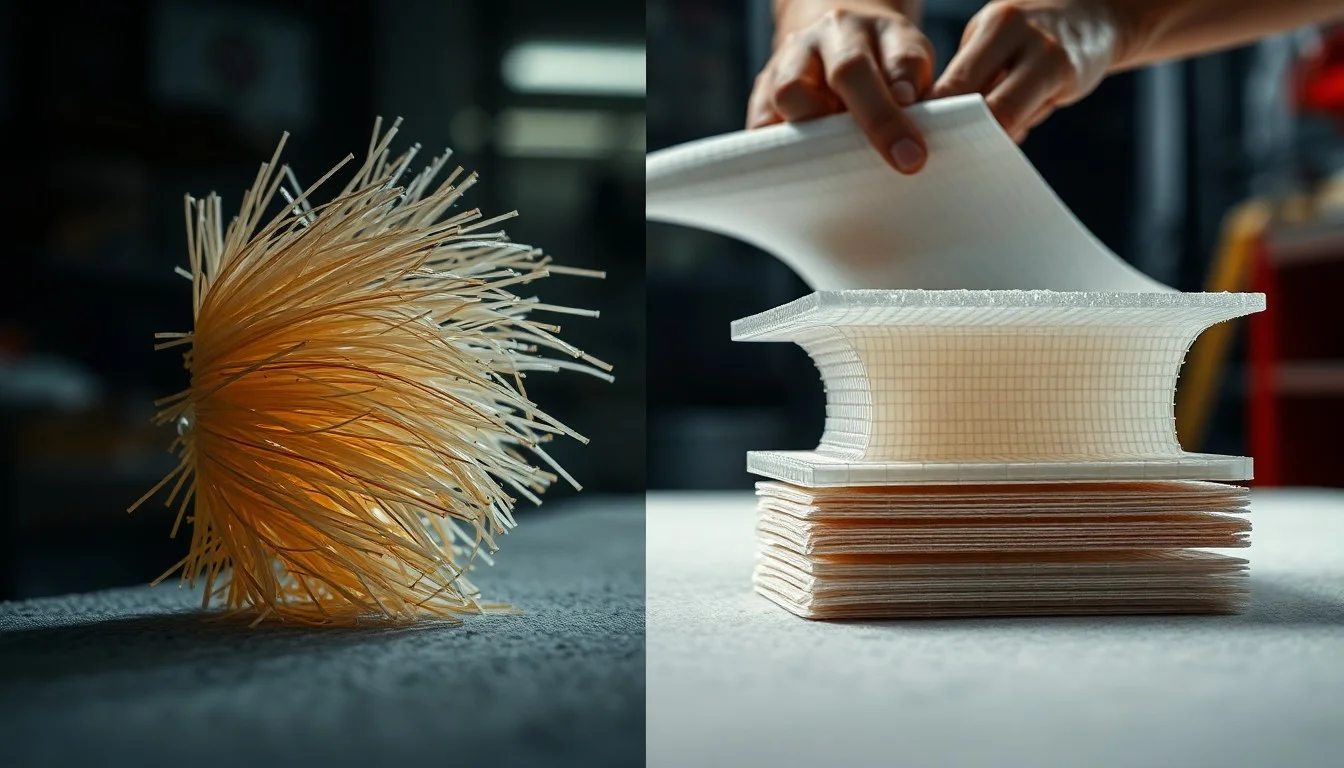
The Muscle of the Composite
Resin is brittle on its own. The glass fibers provide the tensile strength. Understanding the difference between the types of glass fabric is crucial for designing structural parts.
Types of Reinforcement
Chopped Strand Mat (CSM)
Woven Roving
Random Orientation.
Consists of short fibers held together by a binder that dissolves in styrene.
- Function: Bulking agent. It builds thickness quickly and prevents «print-through» of fabric textures.
- Strength: Isotropic (equal strength in all directions) but relatively low tensile strength.
- Usage: Skin coats (first layer against gelcoat) and between layers of roving.
Lamination Schedule Strategy
You rarely use just one type. A typical "schedule" (layering plan) for a strong part looks like this:
- Gelcoat: The cosmetic surface.
- Skin Coat (Mat): A thin layer of CSM to hide the weave of the heavier fabrics and prevent blistering.
- Structural Layer (Roving): For strength.
- Inter-layer (Mat): Roving doesn't stick well to Roving. You need a layer of Mat in between to bond them.
- Final Layer: Mat or Surface Veil for a smooth interior finish.