

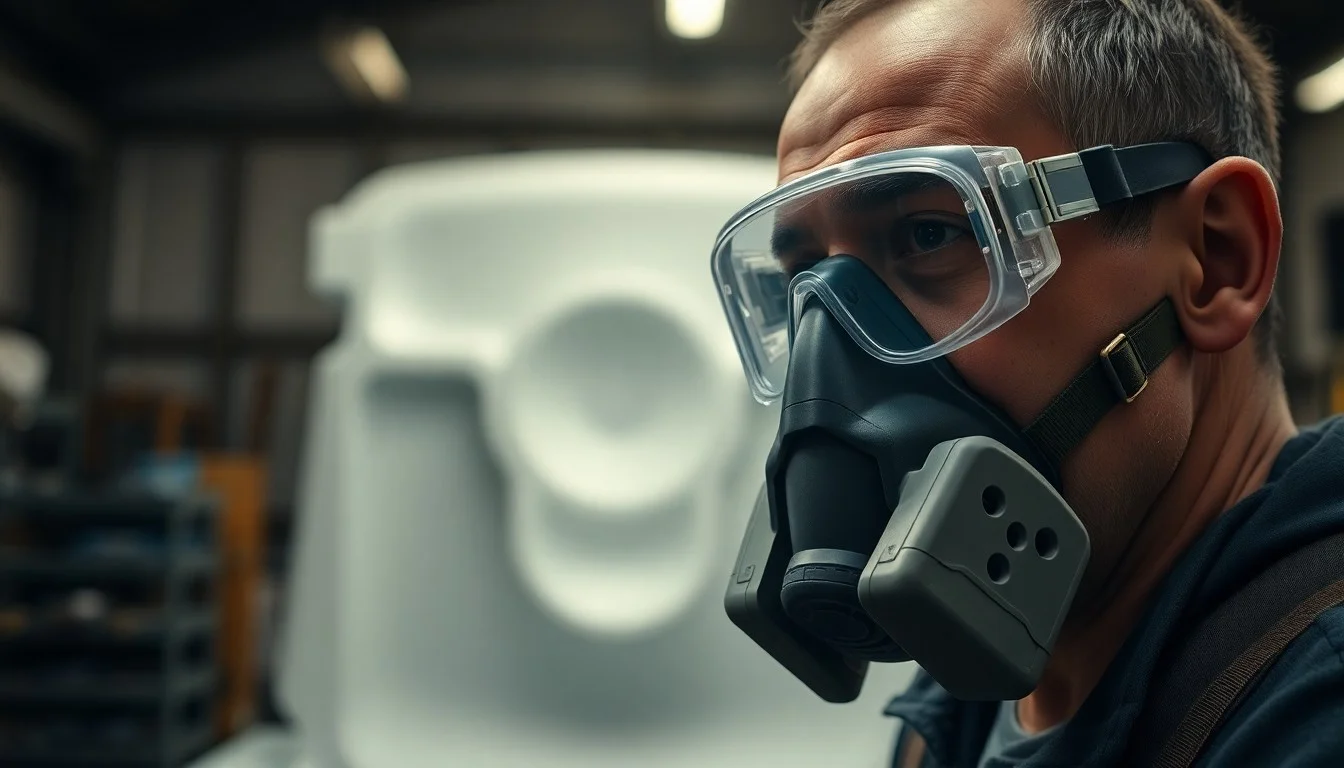
Safety is Non-Negotiable
Working with fiberglass involves exposure to volatile organic compounds (VOCs), fine glass dust, and skin irritants. Before mixing a single drop of resin, you must establish a safety perimeter. Neglecting safety can lead to long-term respiratory issues and severe dermatitis (skin inflammation).
Personal Protective Equipment (PPE)
Your personal safety gear is your primary defense against the hazards of the workshop. Standard dust masks are insufficient for chemical vapors.
Respiratory Protection
Organic Vapor Respirators are mandatory when working with polyester or vinylester resins. Look for NIOSH-approved cartridges (often black or yellow coded for organic vapors). For sanding, use P100 particulate filters to block glass dust.
Skin Protection
Fiberglass strands can penetrate pores, causing the infamous «fiberglass itch.» Wear Tyvek suits or long sleeves. Use Nitrile gloves for chemical handling; latex can dissolve when in contact with styrene or acetone.
Eye Protection
Chemical splashes can cause permanent damage. Always wear sealed safety goggles (not just glasses) to prevent fumes and splashes from reaching your eyes, especially when mixing catalysts.
Workshop Ventilation Strategy
Styrene gas is heavier than air and will settle near the floor. A proper ventilation plan moves air effectively to prevent fume buildup.
Cross Ventilation
Exhaust Fans
No Sparks
Pro Tip: Position exhaust fans at floor level to remove heavy styrene fumes, and intake fans high up to bring in fresh air.