

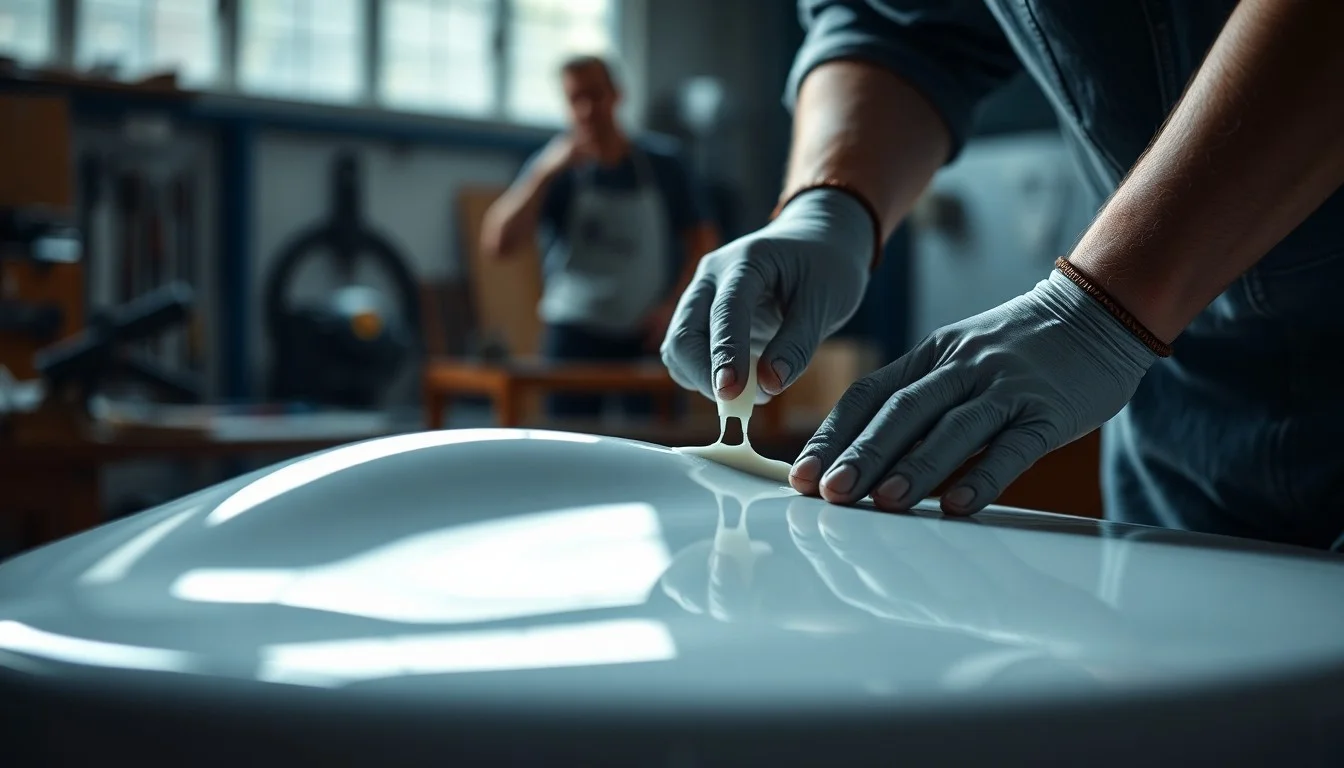
Ensuring a Clean Release
The most terrifying moment in fiberglass work is demolding. If you haven’t prepared the surface correctly, the part will chemically bond to the mold, destroying both. This is called a «stick-up.»
The Release System
A robust release system usually consists of two stages: a sealer/wax and a barrier film.
Clean and Polish: The mold surface must be perfectly clean. Polish it to a high gloss. Any dull spot is a mechanical lock waiting to happen.
Mold Release Wax: Apply high-temp paste wax (specifically for composites, like carnauba based). Apply in circular motions, let haze, and buff off. Repeat this 5 to 7 times for a new mold.
PVA (Polyvinyl Alcohol): For new molds or high-risk parts, spray or wipe a layer of PVA. It dries to form a thin, green/clear plastic film that physically separates the part from the mold. It dissolves in water, making cleanup easy.