

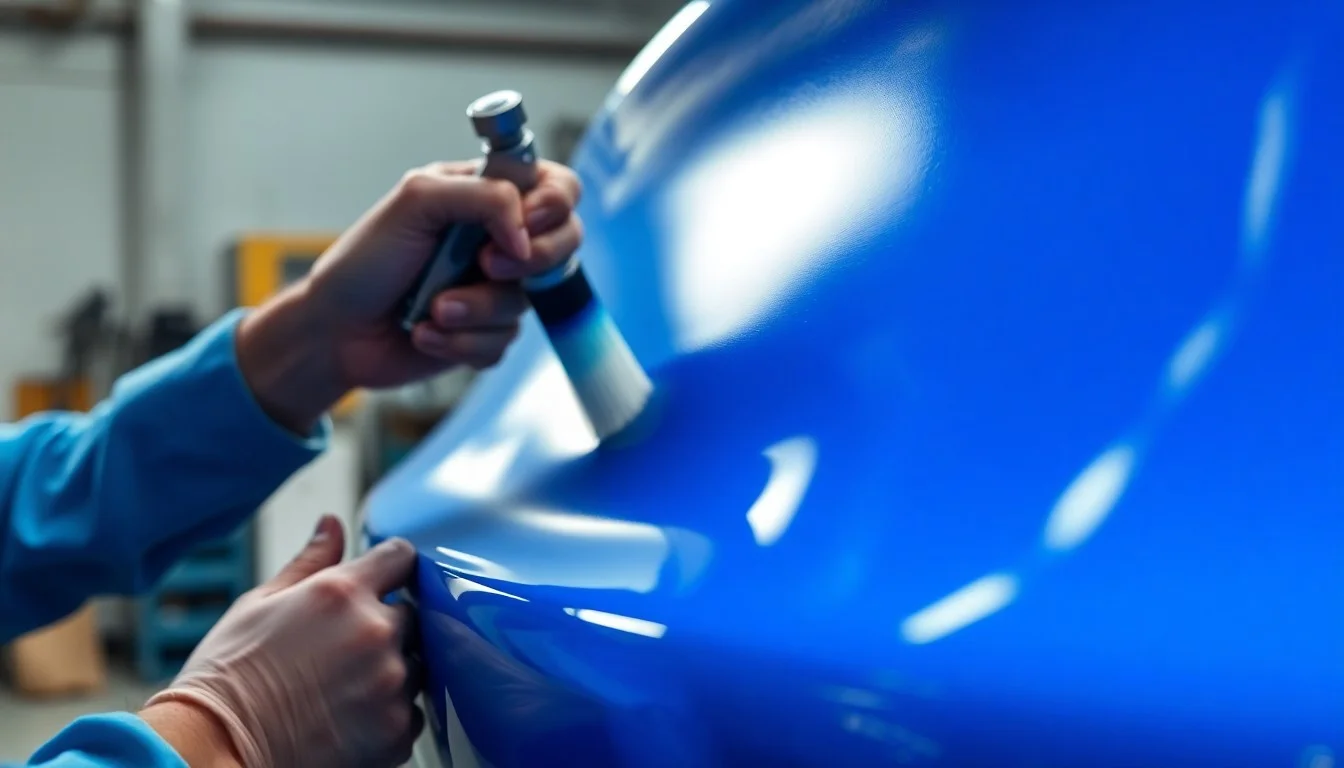
The Face of Your Product
Gelcoat is a specialized resin that serves as the cosmetic skin of your part. It provides color, gloss, and protection against UV radiation and water intrusion. Unlike paint, it is applied first into the mold.
Application Best Practices
Thickness Matters
Target thickness is 18 to 25 mils (approx 0.5mm).
- Too Thin: The glass fibers will show through (print-through), and it may cure improperly (alligatoring).
- Too Thick: It becomes brittle and prone to cracking under stress.
Spraying vs. Brushing
Spraying (using a cup gun) yields the most uniform finish. If brushing, use long, even strokes and apply two thin coats perpendicular to each other to avoid brush marks and thin spots.
Timing the Laminate
Wait for the gelcoat to become «tacky» (sticky like masking tape, but no color transfers to your finger) before applying the fiberglass. If you laminate too soon, the resin will dissolve the gelcoat.
Creating Custom Finishes
Fiberglass is a chameleon. You can modify gelcoat to mimic other materials:
* Stone/Granite: Mix in specialized filler granules (like granite chips) and back with a dark resin. Sand and polish after demolding to reveal the texture.
* Metallic: Add metal powders (bronze, copper) to the gelcoat. Once polished, the metal particles shine and can even patina over time.
* Matte: Use a matting agent or sand the final surface with fine grit to remove the gloss for a modern architectural look.