

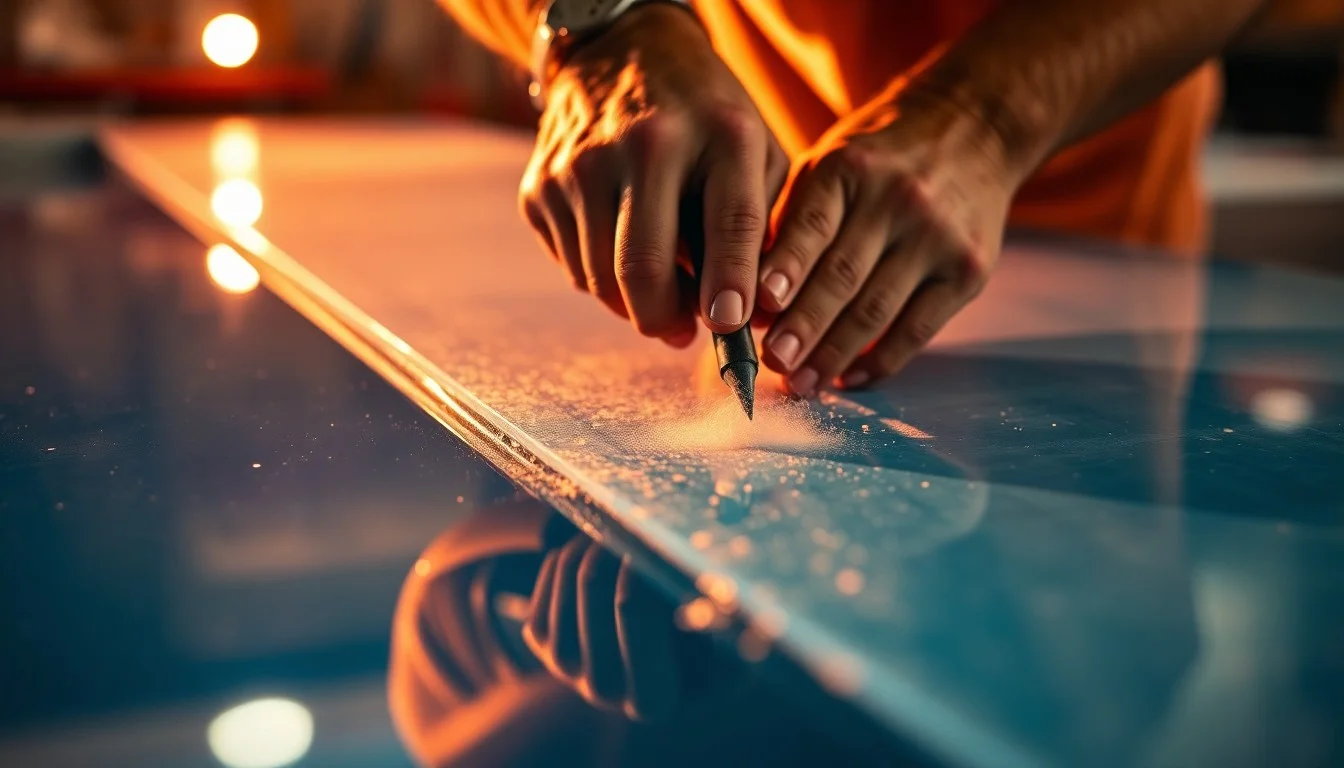
The Art of Repair
Fiberglass is one of the few materials that can be repaired to 100% of its original strength. The key is understanding that new resin does not chemically bond well to old, cured resin. You must rely on mechanical adhesion.
The Repair Protocol
Damage Assessment: Identify the extent of the crack. Drill small «stop holes» at the ends of the crack to prevent it from spreading further.
Grinding (The 12:1 Rule): You must grind out the damaged area. Create a taper (bevel) around the hole. The width of the taper should be 12 times the thickness of the laminate. This provides a large surface area for the new patch to grip.
Dewaxing: Before grinding, clean the area with solvent to remove wax/grease. If you grind first, you drive the wax into the scratches, causing bond failure.
Patching: Start with small pieces of glass to fill the hole, then progressively larger pieces to fill the taper. Finish with a layer of mat slightly larger than the repair area.
Finishing the Patch
Once the structural patch cures, it will be rough.
- Sand it flush.
- Apply Gelcoat (mixed with wax additive or «patch aid» so it cures in air).
- Sand with fine grits (400 -> 600 -> 1000).
- Buff to a mirror shine.
Note: Color matching aged gelcoat is difficult. It is often better to paint a decorative stripe or pattern over a repair if an exact match is impossible.